Just the Guitar and the Truth: Why Mitch Musso Keeps Going Back to Bare Bones

There's a version of every song that exists before the producers get their hands on it. Before the reverb gets stacked, before the drum machines kick in, before the mixing board turns a simple melody into a polished product. That raw, unadorned version is often the truest one — and Mitch Musso has spent a significant part of his artistic life chasing it.
For an artist who came up inside the Disney machine, where everything from wardrobe to vocal takes was carefully managed and optimized, the choice to strip things down feels almost radical. But that's exactly what makes it meaningful.
What Gets Exposed When the Production Disappears
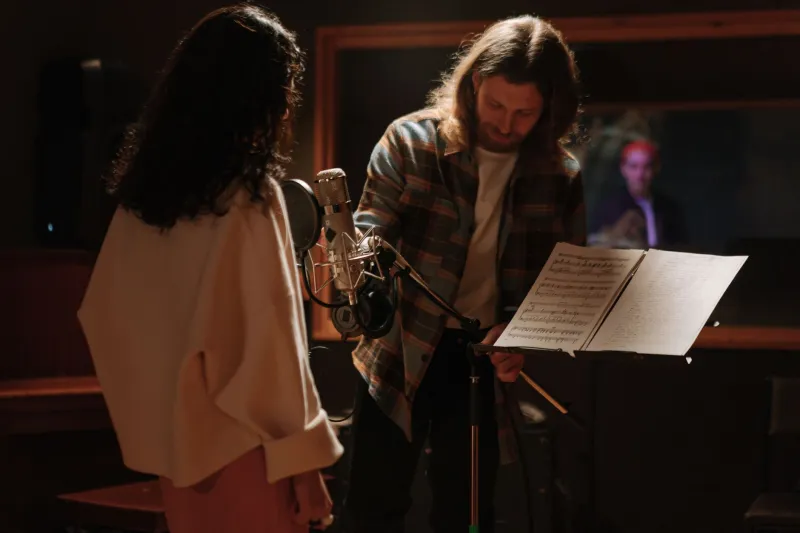
Acoustic performance is basically a stress test for songwriting. You can't hide a weak verse behind a synth drop. You can't paper over a clunky lyric with a killer beat. When it's just you, a guitar, and a microphone, every word has to carry its own weight.
Mitch has leaned into that vulnerability rather than running from it. His stripped-down performances — whether captured in intimate studio sessions or delivered live to a crowd that's quiet enough to hear him breathe — have a quality that his fully produced tracks sometimes can't replicate. There's an immediacy to them. A sense that you're hearing exactly what the song was always trying to say, before the industry got involved.
That kind of honesty resonates with people in a way that's hard to manufacture. Audiences in the US have been gravitating toward authenticity for years now — think of the explosion of bedroom pop, the enduring appeal of singer-songwriter culture, the way acoustic covers on social media consistently outperform glossy originals. Mitch isn't just following that wave. He's been swimming in it for a while.
The Creative Philosophy Behind the Quiet
Stripping a song down isn't just a performance choice — it's a compositional one. When Mitch approaches an acoustic arrangement, he's essentially asking himself what the song is actually about. Not what it sounds like. What it means.
That process tends to surface details that get buried in fuller productions. A chord change that felt subtle in the original suddenly becomes the emotional center of the track. A line that was easy to sing over a driving rhythm becomes something you have to sit with when the tempo slows and the arrangement opens up.
For songwriters who grew up watching their work get filtered through layers of studio collaboration and label input, this kind of reclamation has real psychological weight. It's a way of saying: this is mine. This is what I was trying to say from the beginning.
Mitch has talked about the importance of creative ownership throughout his independent career, and the acoustic format is one of the most direct expressions of that ownership. You don't need a budget. You don't need a session band. You don't need approval from anyone. You just need the song and the willingness to play it as plainly as possible.
Connection in Real Time
There's also something worth noting about what happens between a performer and an audience when the production scaffolding comes down. The dynamic changes entirely.
At a full-band show, audiences are partly responding to the spectacle — the lights, the volume, the collective energy of a room full of people experiencing something together. That's not nothing. But at an acoustic set, the connection is more direct. More personal. People tend to listen differently. They lean in. They catch lyrics they'd missed before. They notice the way a voice cracks on a particular note.
For an artist like Mitch, who has a genuine storytelling instinct and a knack for writing lyrics that land on an emotional level, that kind of attention is a gift. It means the audience is receiving the work the way it was intended — not as background music or a soundtrack to something else, but as the main event.
Fans who've seen him in smaller, more intimate settings consistently describe those experiences as something different. Not better or worse than a bigger production, but different in a way that sticks with you longer.
Evolving Without Abandoning
One thing that's easy to miss in conversations about acoustic music is that choosing simplicity doesn't mean rejecting complexity. Mitch's songwriting has grown considerably more layered and nuanced over the years — in terms of subject matter, emotional range, and structural craft. The acoustic format doesn't flatten that growth. It frames it.
In fact, there's an argument to be made that stripped-down performance is actually a more demanding showcase for an evolved artist than a polished studio production. Anyone can sound good with the right team behind them. Sounding good with just a guitar in the room — that takes real skill, real confidence, and real songs.
What Mitch has built over his career is a body of work that can hold up under that kind of scrutiny. And the fact that he keeps returning to acoustic arrangements, keeps choosing the harder, more exposed format, says something important about where his confidence as a writer and performer actually lives.
It lives in the songs. Not in the production around them.
Why It Matters for Where He's Headed
As Mitch continues to develop his independent creative path, the acoustic dimension of his work serves a practical purpose beyond artistic expression. It keeps him connected to the foundation of what he does.
In an era where music careers can get wildly complicated — streaming metrics, social media strategy, brand partnerships, genre pivots — there's real value in having a practice that brings things back to basics. A regular reminder that at the end of the day, you're a person with something to say and an instrument to say it on.
That reminder tends to keep the rest of it in perspective. And for audiences who want to feel like they actually know the artists they follow, it's one of the most effective tools available.
Stripped down, it turns out, is a pretty powerful way to stand out.