Stage Craft: Why Mitch Musso's Acting Background Makes Him a Better Live Performer
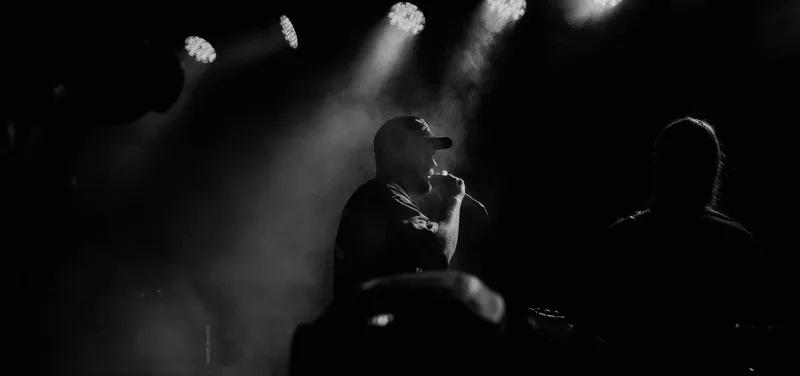
When people talk about what makes a great live music performance, they usually focus on the obvious stuff: vocal ability, band tightness, setlist choices, sound quality. Those things matter. But there's another dimension that separates a technically competent performance from one that actually moves people — and it has less to do with music training than you might expect.
It has to do with presence. With intention. With the ability to make every person in a room feel like the performance is happening specifically for them. That's not a skill most music programs teach. But acting programs do.
For Mitch Musso, years of on-camera work and theatrical training created a secondary toolkit that he's carried onto every stage he's stood on since. And the more you watch him perform live, the more obvious it becomes that those two disciplines aren't separate for him — they're deeply, productively intertwined.
What Actors Know That Musicians Often Don't
Here's a fundamental difference between how actors and musicians are typically trained. Musicians learn to execute — to hit the right notes, maintain rhythm, stay in key. The goal is technical accuracy. Actors, meanwhile, are trained to pursue something less quantifiable: emotional truth. The goal is to make something feel real.
Acting technique — whether it's rooted in Stanislavski's method, Meisner's responsiveness work, or any number of other approaches — asks performers to identify the emotional core of a moment and then find the most authentic way to express it. It's less about what you're doing and more about why, and what's genuinely happening inside you as you do it.
Applied to live music performance, that shift in orientation is significant. A musician trained primarily in technique might deliver a song correctly without ever really inhabiting it. An actor-musician like Musso approaches the same song differently — asking what this lyric actually means, what emotional state it requires, and how to convey that state so the audience feels it rather than just hears it.
Reading the Room as a Performance Skill
One of the most practical skills that acting training develops is audience awareness — the ability to read a room and adjust in real time. In theater, this is called responsiveness. You're not just delivering lines; you're reacting to the energy in the space, modulating your performance based on what's coming back at you.
This is enormously useful on a music stage. A live audience isn't passive. They're communicating constantly — through their energy, their movement, their noise level, the way they respond to specific moments in a song. Performers who pick up on those signals and adjust accordingly create shows that feel alive and specific to that night. Performers who don't tend to deliver the same show regardless of the crowd, and audiences can feel the difference.
Musso's comfort with this kind of responsiveness is visible if you watch his live footage carefully. He's not running a fixed program. There are moments where he leans into something the crowd responds to, holds a beat longer than the arrangement technically requires, or shifts the emotional register of a song mid-performance based on what's happening in the room. That's not accident — it's trained instinct.
Emotional Preparation Before the Show
Actors who work in method-adjacent traditions often spend significant time before a performance doing what's called emotional preparation — essentially, accessing the genuine feelings that a scene or character requires before they step into the lights. The goal is to arrive emotionally ready, not to manufacture feelings on the fly.
For a musician performing emotionally complex material, a version of this practice makes real sense. Songs about loss, longing, joy, or frustration don't hit an audience the same way when they're delivered from a neutral emotional state. They require the performer to be genuinely in the vicinity of those feelings — not faking it, but actually accessing something real.
Musso has spoken in various contexts about how he approaches his songs as stories, which is a distinctly actor's way of framing the task. When you treat a song as a story with a character, a situation, and an emotional arc, you're not just singing words — you're performing a scene. And that framing changes everything about how the delivery lands.
Physical Presence and the Language of the Body
Acting training pays enormous attention to physical communication — the idea that what your body does tells the audience as much as what your voice says. Posture, gesture, eye contact, movement across a stage: all of these are tools that trained performers learn to use intentionally rather than unconsciously.
On a music stage, this translates directly. Where a performer stands, how they move, where they direct their attention, what they do with their hands — all of it contributes to the overall impression. A vocalist who's physically engaged and purposeful in their movement creates a fundamentally different experience than one who stands rooted to a single spot and focuses on technical delivery.
Musso's stage physicality reflects his theatrical background in ways that are easy to spot. He uses the full stage deliberately. His gestures tend to serve the emotional content of the moment rather than just filling space. And his eye contact with the audience — particularly during more intimate moments in a set — carries the weight of someone who's been trained to use gaze as a communicative tool, not just a default.
When the Two Disciplines Amplify Each Other
The most interesting thing about Musso's dual background isn't that acting makes him a better musician or that music makes him a better actor — it's that the two disciplines have developed a kind of feedback loop. The emotional specificity he's built through acting work makes his musical performances more resonant. And the discipline of performing music live — night after night, in front of real crowds — has sharpened his ability to stay present under pressure, which is exactly what acting requires.
This cross-pollination is genuinely rare. Most performers stay in their lane, and the specialization has its advantages. But for someone like Musso, who has spent years operating seriously in both worlds, the overlap has become a genuine competitive advantage.
The result is a live performance experience that's harder to define than a technically excellent show but easier to feel. When you watch Mitch Musso perform live, something is happening beyond the music. The songs feel inhabited. The connection feels real. And that's not an accident — it's the product of two disciplines working together in ways that neither could fully achieve alone.
Next time you catch a Musso show, pay attention to the moments between the notes. That's where the acting lives.