Lights Up: How the Stage Became Mitch Musso's Most Honest Creative Space
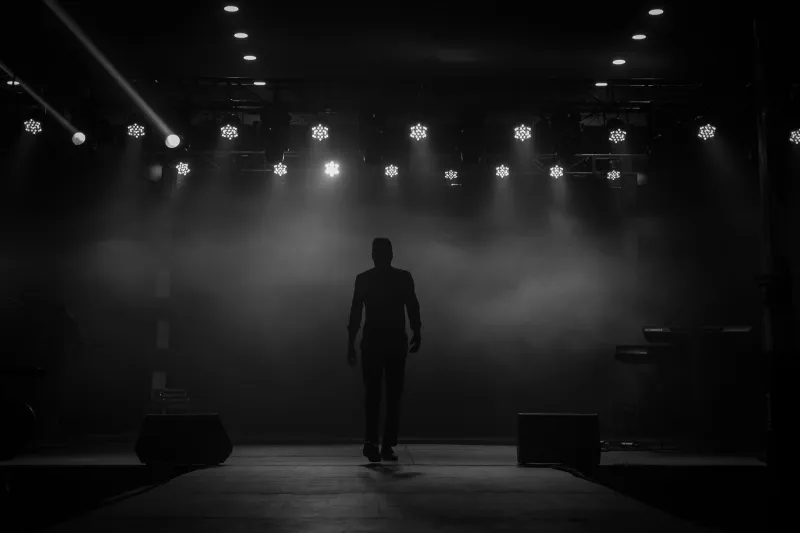
Lights Up: How the Stage Became Mitch Musso's Most Honest Creative Space
There's a moment every performer knows — the one where the safety net disappears. No director calling cut, no editor smoothing over the rough edges, no green screen to fill in the gaps. It's just you, a crowd, and whatever you've got. For Mitch Musso, chasing that moment has become one of the defining pursuits of his artistic life.
Most fans first knew him as the kid who could make you laugh without breaking a sweat, delivering lines on Hannah Montana with a natural ease that made acting look effortless. But the truth is, effortless takes work — and Mitch has been doing that work in places a lot of his original fanbase might not have expected.
The Pull of the Stage
Ask any actor who's made the jump from screen to stage and they'll tell you the same thing: live performance is a completely different animal. The mechanics of TV acting — hitting marks, working within the rhythm of production schedules, trusting that post-production will carry some of the weight — don't translate cleanly to the theater. You have to rebuild your approach almost from scratch.
For Mitch, that rebuilding process turned out to be exactly what he needed. After years of on-camera work that started when he was barely a teenager, the stage offered something rare: a space where every performance is its own complete thing. There's an immediacy to live work that's almost addictive once you've experienced it. The audience isn't watching something that was made — they're watching something happening, right now, in real time.
That distinction matters more than it might sound. On a TV set, a scene can be shot a dozen times. The version audiences see is the best one, curated and polished. On stage, the version audiences see is the only one. Every choice lands or it doesn't, and you know immediately which it is.
Preparation as a Different Kind of Discipline
One thing that stands out when you look at how Mitch has approached live performance is the seriousness of his preparation. The guy who came up in an industry built on quick turnarounds and tight production windows had to learn a completely different relationship with rehearsal time.
Stage work demands that you carry the entire arc of a character in your body at all times. You can't rely on a scene-by-scene approach the way you might on a TV shoot. Everything has to be internalized, ready to be accessed in sequence, under pressure, in front of people who paid to be there. That kind of preparation is closer to athletic training than it is to the typical TV actor's process.
For Mitch, who also brings his musical instincts into everything he does, there's an interesting overlap. Musicians who perform live already understand the discipline of preparation — the hours of rehearsal that go into making something look spontaneous. That background gave him a head start when it came to understanding what live performance actually requires.
When the Music Meets the Moment
One of the things that makes Mitch's live presence genuinely compelling is the way his dual identity as a musician and actor collapses into something unified when he's in front of an audience. The two crafts inform each other in ways that are hard to fully articulate but easy to feel.
A musician learns to read a room, to adjust energy in real time, to feel the feedback loop between performer and crowd. An actor learns to inhabit emotion authentically, to make choices that serve a larger narrative. When those skills combine in a live setting, the result is a performer who's operating on multiple frequencies simultaneously — present in the moment, connected to the material, and genuinely responsive to the people in the room.
Fans who've caught Mitch in live settings have consistently noted something that doesn't quite come through on screen: a warmth and spontaneity that feels unfiltered. That's not an accident. It's the product of someone who's done the preparation work and then made the conscious choice to trust it and let go.
What the Screen Can't Capture
There's a version of Mitch Musso that casual fans might still have frozen in amber — the funny, likable kid from a beloved Disney Channel era. That version is real, and there's nothing wrong with it. But it's a partial picture.
Live performance has a way of revealing dimensions that cameras sometimes flatten. The scale of stage work, the physical commitment it requires, the emotional exposure involved in performing without a net — all of it brings out qualities in a performer that might stay hidden otherwise. For Mitch, the stage has been a place to demonstrate range, resilience, and a creative seriousness that goes well beyond what any single TV role could show.
It's also worth noting that his journey into live performance didn't happen in isolation. It's part of a broader creative evolution that's included independent music releases, a more intentional approach to the projects he takes on, and a willingness to step into spaces that are genuinely challenging. The stage fits that pattern perfectly.
What Fans Can Expect
If you've never seen Mitch perform live — whether in a theatrical context or a music setting — it's worth making the effort. The experience is genuinely different from anything you'll get through a screen. There's a specificity to his stage presence, a quality of attention he brings to live work, that makes each performance feel like something you were actually there for rather than something you consumed.
For longtime fans, it's a chance to see someone they've followed for years doing something that clearly means a great deal to him. For newer audiences, it's an introduction to an artist who's been quietly building something substantial while the entertainment world kept moving.
The lights come up, the safety net disappears, and Mitch Musso shows you exactly who he is. That's the deal with live performance — and based on everything he's brought to it so far, it's a deal worth showing up for.