Order Matters: The Hidden Craft Behind a Mitch Musso Setlist

Photo: Nationgirl, CC0, via Wikimedia Commons
There's a moment at every great live show that nobody talks about afterward: the transition. Not the chorus everyone screamed along to, not the guitar solo that made the front row lose its mind — the ten seconds between one song and the next. Done right, it's invisible. Done wrong, it's the reason a show feels off even when nobody can say why.
Mitch Musso has spent enough years on stages — from Disney Channel-era tours to intimate independent gigs — to understand that a setlist isn't a playlist. It's an architecture. And the fans who show up night after night can feel the difference.
The Opening Gamble
The first song of the night is a handshake. Go too big too fast and you've got nowhere to go but down. Start too soft and you risk losing a room that's still settling in with overpriced beer and phones in hand.
Watch a Musso set closely and you'll notice the opener tends to do one of two things: it either announces intent with energy, or it disarms the crowd with something stripped-down and honest before the floor drops. Both approaches work — but only if the artist knows which room they're walking into. A Thursday night club gig in Austin needs a different handshake than a festival stage outside Chicago.
The Valley Is the Point
Here's the counterintuitive part: great shows aren't wall-to-wall bangers. The quiet stretch in the middle — the acoustic detour, the story about how a song got written, the moment the artist asks the crowd where everyone's from — that's not filler. That's the exhale.
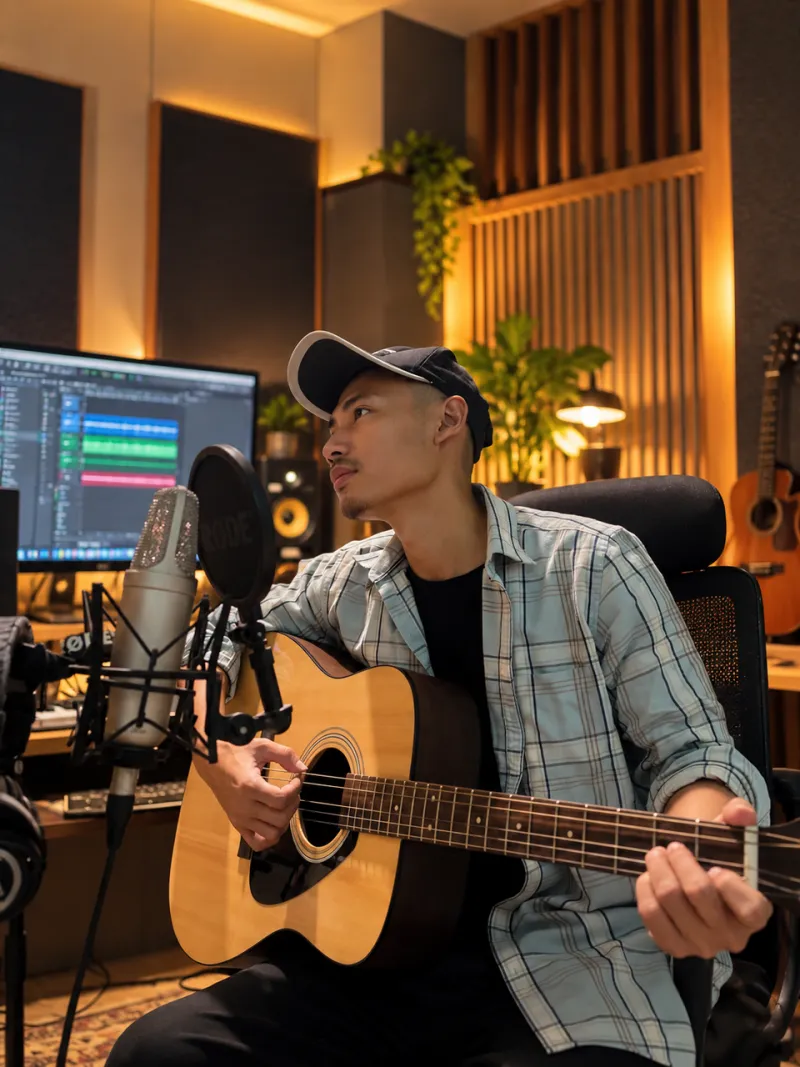
Musso's acoustic segments have become a signature of his live returns, and it's easy to see why. When a performer who grew up in front of cameras sits alone with a guitar and no backing track, the audience isn't just hearing songs. They're being trusted with something. The crowd gets quieter. People stop filming. That valley is what makes the next high hit twice as hard.
Sequencing works the same way a good album does — tension, release, tension again. A set that peaks at song four has nowhere to go. A set that saves something for the encore is playing the long game.
Talking Between Songs Is a Skill, Not a Break
Let's be honest: banter can be brutal. Every concertgoer has endured the artist who rambles for five minutes about parking while the energy bleeds out of the building.
But when it's real? It changes everything. Musso's between-song moments tend to feel less like performance and more like a guy catching up with people he knows. Part of that is personality — his no-filter approach with fans is well documented — but part of it is deliberate. A well-placed story before a heavy song gives it context. A quick joke after an emotional one gives the room permission to come back up for air.
The crowd isn't an audience at that point. It's the other half of the conversation.
Reading the Room in Real Time
The best setlists are written twice: once on paper, and once in the moment. A crowd that's locked in from song one might earn an extra deep cut. A room that's still warming up might need the hits pulled forward.
Veteran performers develop a kind of radar for this — the ability to scan a crowd mid-song and make a call. It's why no two shows on a tour are ever quite identical, and why the people who follow a run of dates swear the show they caught was the best one.
Why It Matters More Now
In an era when anyone can stream any song, anytime, the live show is the one thing that can't be copied, shuffled, or skipped. The sequence is the product. The room is the venue for something that only exists once.
That's what separates a concert from a recital. A recital is a demonstration. A concert is a night built for the people in it — and when the sequencing is right, when the dips and peaks land where they should, everybody in that room leaves knowing they were part of something that won't happen the same way twice.
That's not luck. That's craft. And it's hiding in plain sight between every song.