Still in the Room: Why Mitch Musso Hasn't Stopped Competing — and Why That's the Whole Point

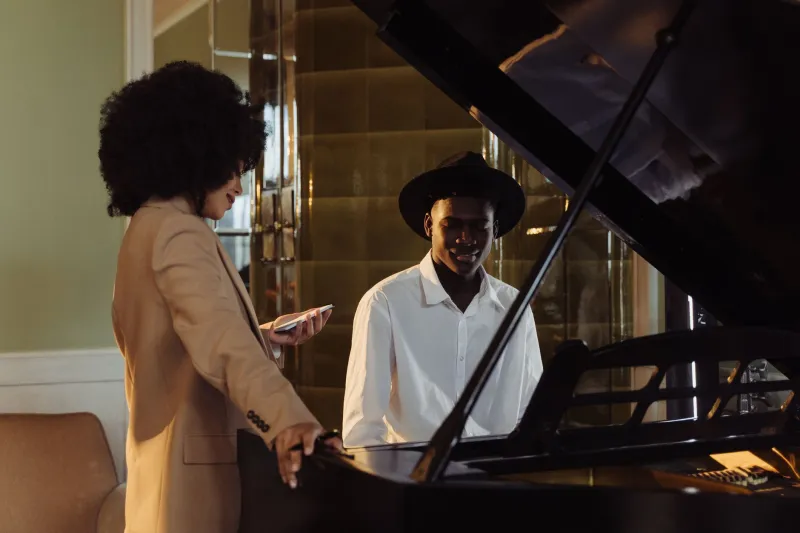
Photo: confident young male performer preparing backstage for audition, via c8.alamy.com
There's a comfortable myth in entertainment that success eventually means you stop having to prove yourself. That you reach some threshold of recognition after which the roles come to you, the opportunities arrive unsolicited, and the hustle becomes a thing of the past. It's a nice story. It's also mostly fiction.
The artists who maintain genuine creative relevance over the long haul — not just nostalgia-driven relevance, but the kind that keeps generating new work and new audiences — are almost universally people who never fully bought into that myth. Mitch Musso is a useful case study in why staying hungry isn't a sign of insecurity. It's a professional discipline.
What Auditioning Actually Means at This Stage
Let's clarify something upfront: when we talk about Mitch continuing to audition and pursue roles, we're not describing someone who hasn't made it. We're describing someone who understands that "making it" isn't a destination with a fixed address. It's a practice.
For an artist who first appeared on screens as a kid and built a career through his teenage years in the Disney system, there's an obvious inflection point that comes in the mid-twenties. The roles that defined you stop being available. The industry looks at you differently. You either adapt by continuing to compete for new kinds of opportunities, or you coast on what you've already built.
Coasting has a ceiling. Competing doesn't.
Mitch's willingness to walk into a room and make a case for himself — for a role he might not be the obvious choice for, or a project that stretches his range — reflects a genuine understanding of how creative growth actually works. You don't get better by doing what you're already good at. You get better by attempting things that might not work.
The Psychological Value of Not Being the Sure Thing
Here's something that doesn't get discussed enough in the entertainment industry: there's real psychological value in being an underdog, even occasionally. When you're the established choice for a certain type of role or project, there's a subtle pressure to protect that status. Risk-taking starts to feel threatening rather than exciting.
When you put yourself in situations where you're competing, where the outcome isn't guaranteed, something different happens. You have to actually show up fully. You can't rely on reputation or prior work to carry you. You have to be present, prepared, and genuinely good in the moment. That's a muscle. And like any muscle, it atrophies if you don't use it.
Mitch staying in competitive environments keeps that muscle active. It means when the right high-stakes opportunity arrives, he's not rusty. He's been in the room. He knows what it takes.
Range as a Career Strategy
One of the most interesting things about watching Mitch's career arc is how deliberately he seems to be expanding his range rather than deepening a niche. A lot of artists do the opposite — they find what works, they repeat it with variations, and they build a reliable brand around a recognizable type.
That's a valid strategy, and it works for plenty of people. But it's not the only strategy, and it comes with a particular kind of vulnerability: when the market for your type shifts, you have nowhere to go.
By continuing to pursue roles and projects that don't fit neatly into the "former Disney star" box, Mitch is building something more durable — a reputation as someone who can do more than one thing well. That reputation takes longer to build, requires more risk, and demands more of you as a performer. It also tends to produce a more interesting career.
The auditions that don't result in callbacks aren't failures in this framework. They're research. They tell you something about where your range currently ends and where it might be extended with work.
What Hunger Looks Like When You've Already Had Success
There's a specific kind of ambition that's harder to maintain than the raw hunger of someone starting out. When you haven't made it yet, the drive is obvious — you need to. When you've already built something real, the motivation has to come from a different place. It has to be about the craft itself, about the genuine desire to grow, rather than about survival.
The artists who navigate that transition successfully tend to share a particular quality: they're genuinely curious about what they're capable of. They're not trying to prove something to the industry or to critics or to the people who doubted them. They're trying to answer a question they have about themselves.
For Mitch, that curiosity seems to be the engine. The willingness to put himself in competitive situations isn't about ego or insecurity — it's about staying engaged with the process of getting better. That's a fundamentally different motivation than the hustle of someone who has something to prove, and it produces a different kind of work.
The Unexpected Doors That Open When You Stay in the Game
There's a practical dimension to all of this that's worth naming directly. The entertainment industry runs on relationships and timing in ways that are genuinely unpredictable. A director who sees you in an audition for a role you don't get might remember you six months later for something that fits perfectly. A producer who hears you perform might have a project in development that you'd be exactly right for.
None of those connections happen if you're not in the room. The artists who stay active, who keep putting themselves in front of new people and new projects, are simply exposed to more possibilities than those who wait for the phone to ring.
Mitch's continued hustle isn't just about the specific opportunities he's pursuing. It's about maintaining a presence in the ecosystem, staying visible to people who might have exactly the right thing a year from now. In an industry defined by timing, that kind of sustained presence is its own form of strategy.
Staying hungry, it turns out, isn't a phase you grow out of. It's a choice you make every time you decide whether to stay in the room or wait outside it. Mitch keeps choosing the room. That's not nothing — that's the whole game.