Two Disciplines, One Drive: How Mitch Musso Moves Between the Camera and the Mic
There's a moment every multi-hyphenate artist knows well — the one where you have to mentally shift gears so completely that it almost feels like becoming a different person. For Mitch Musso, that moment happens regularly, and he's gotten pretty good at it. Whether he's stepping in front of a camera or settling into a recording session, the tools are different, the headspace is different, and honestly, the version of yourself you bring to the table is different too.
But here's the thing: Mitch doesn't treat those two worlds like they're in competition. He treats them like they're in conversation.
What the Camera Actually Demands
Acting, especially the kind of television work Mitch built his early career on, is an exercise in precision and presence at the same time. You're working within someone else's structure — a script, a director's vision, a co-star's energy, a camera angle that may or may not be forgiving. Every line reading has to feel spontaneous even when it's been rehearsed a dozen times. Every emotional beat has to land on cue.
What's easy to overlook is how physical that process is. Your face is the instrument. Your posture, your eye contact, the half-second pause before you deliver a line — all of it is being captured and magnified. On a show like Hannah Montana, where Mitch played the lovably awkward Oliver Oken for years, that kind of physical storytelling became second nature. Comedy especially demands a kind of bodily awareness that you can't fake. Timing isn't just about words. It's about everything.
There's also the collaborative pressure of a set. You're surrounded by crew, producers, and fellow cast members, all working toward a shared product. The performance belongs to the project as much as it belongs to you. That's a particular kind of creative discipline — learning to give your best while also serving the larger story.
The Studio Is a Whole Different Animal
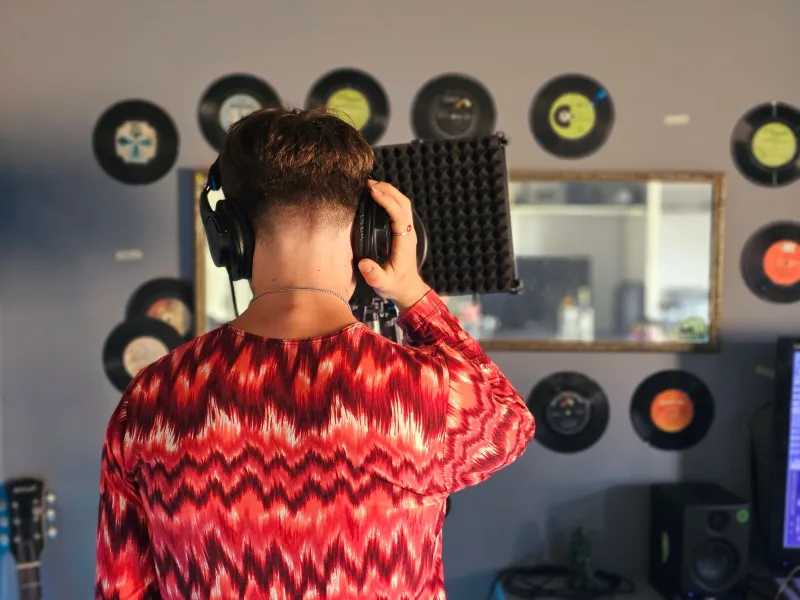
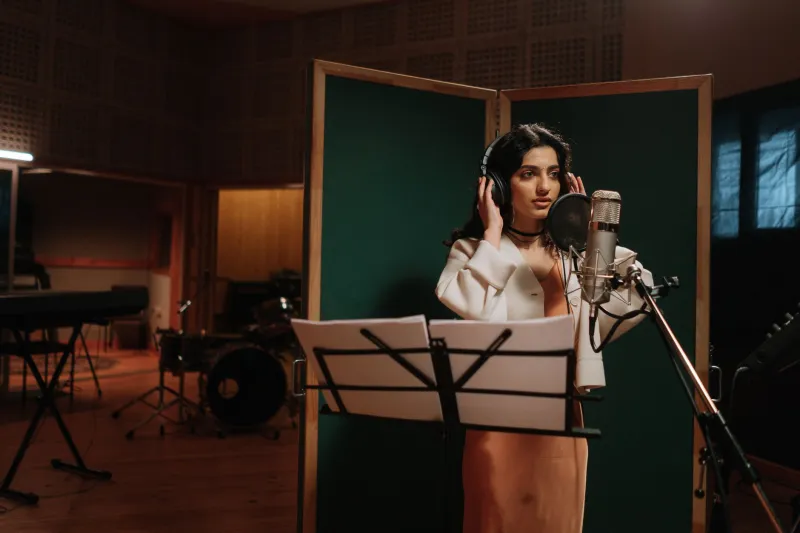
Step into a recording studio, and the rules flip. Suddenly, there's no director calling the shots in real time. No co-star to bounce off of. It's just you, the microphone, and whatever's going on inside your head. That can feel incredibly freeing — or incredibly exposing, depending on the day.
Music production requires a different kind of self-direction. You're not interpreting someone else's script; you're generating the material from scratch. The lyric has to be yours. The melody has to feel true. And then you have to perform it in a way that translates through speakers, through headphones, through a tiny phone playing in someone's car at 2 a.m. There's no camera to catch a meaningful glance. The voice has to carry everything.
For Mitch, moving into independent music meant taking on the full creative weight of that process. No major label infrastructure. No team of writers handing over polished verses. Just a genuine commitment to making something that actually represents where he's at as an artist. That kind of ownership is both the reward and the challenge of the studio world.
How Each Discipline Makes the Other Stronger
Here's where it gets interesting. The skills you build in one lane don't just stay there — they bleed over in ways that aren't always obvious at first.
Acting teaches you emotional availability. When you've spent years training yourself to access genuine feeling on command — to cry on cue, to laugh authentically, to make scripted dialogue sound like real human speech — that emotional muscle doesn't switch off when you walk into a studio. It shows up in vocal delivery. It shows up in the way a lyric gets phrased. Singers who can act a song, who can make you feel like they've actually lived the words they're singing, have something that pure technical training alone can't give you.
On the flip side, music sharpens your instincts for rhythm and timing in ways that directly improve performance on screen. Anyone who's spent serious time in a recording studio — counting bars, feeling the pocket of a beat, understanding how a pause creates tension — brings that internal metronome to their acting work. Comedy, in particular, is almost entirely a timing game. The beat before the punchline. The rhythm of a back-and-forth exchange. Music people often have an edge there.
There's also the confidence factor. Performing your own original music live — standing in front of an audience with just your voice and your songs — requires a kind of raw vulnerability that acting, with its scripted safety net, doesn't always demand. That experience of being completely exposed builds a performance courage that carries back into the acting space.
Live Performance: A Third Variable
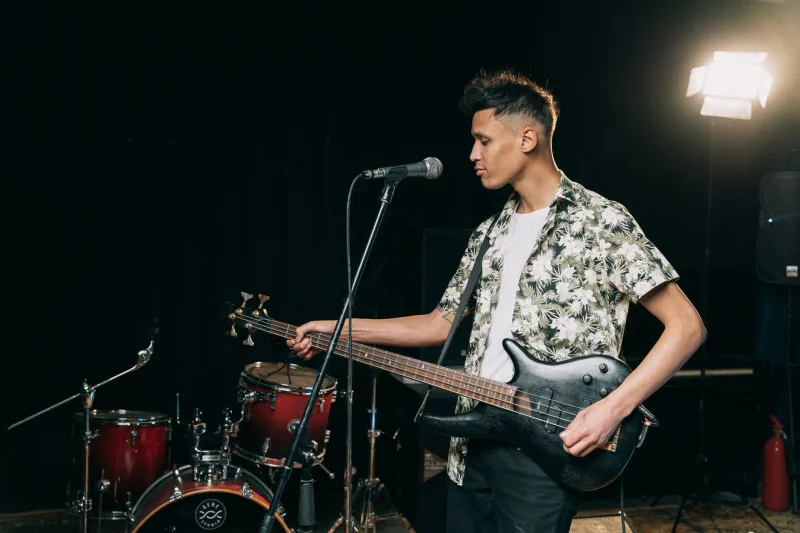
It's worth separating live performance from both studio work and on-camera acting, because it's genuinely its own beast. Playing a show in front of a real audience is interactive in a way that neither recording nor filming can replicate. The crowd's energy is a live variable. Something that killed at soundcheck might land differently when five hundred people are watching. You have to read the room and adjust in real time.
For Mitch, live shows represent a synthesis of everything. The physical presence he developed as an actor. The emotional directness he honed in the studio. The spontaneity of connecting with real people in real time. It's the format where all those separate skills get folded into a single moment, and there's no second take.
The Bigger Picture
What Mitch Musso has built across his career isn't just a resume with two different columns. It's a creative identity that's genuinely informed by the full range of what he's done. The actor who learned to be present made him a better musician. The musician who learned to be vulnerable made him a more honest performer. And the performer who learned to work a live room made him better at both.
Switching creative gears isn't easy. It takes real intentionality to not let one discipline crowd out the other. But for artists willing to put in that work, the payoff is a creative toolkit that most people only get to build one half of. Mitch has been quietly assembling the whole thing for years — and it shows.