Split Focus: The Real Playbook for Thriving in Both Acting and Music Without Burning Out

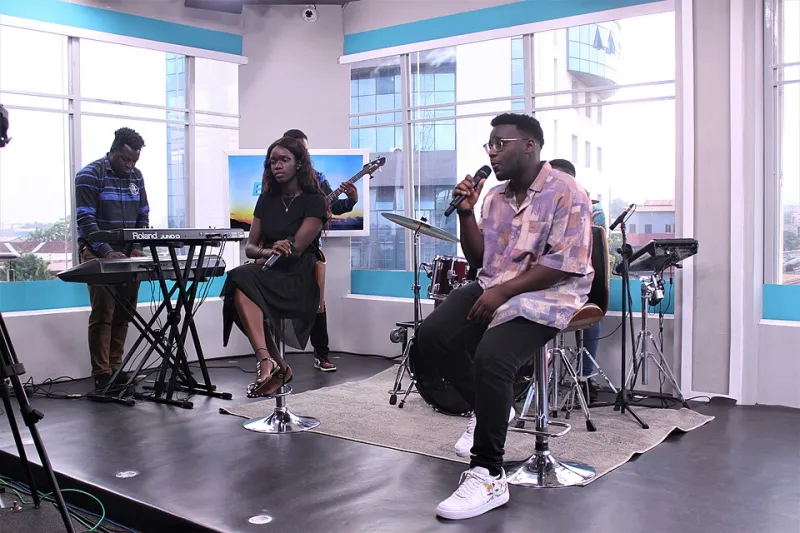
Photo: PAspecialNHCL, CC BY-SA 4.0, via Wikimedia Commons
Imagine being in the middle of a recording session — you're finally getting somewhere with a chorus that's been frustrating you for weeks — and your phone buzzes with a script. An audition. A good one. The kind you don't want to pass on.
This is the daily reality for artists who work across both music and acting. It's not glamorous. It's a constant negotiation between two demanding disciplines, each of which wants everything you've got.
So how do people actually do it?
The Myth of the Effortless Multi-Hyphenate
Pop culture loves the narrative of the naturally gifted entertainer who just does it all — acts in the morning, records in the afternoon, performs on the weekend. It makes for a good magazine profile. It's not particularly accurate.
The reality of sustaining both a music career and an acting career is significantly more complicated, and significantly more intentional. The artists who manage it well aren't just talented — they're strategic in ways that rarely get discussed publicly.
Mitch Musso is a good example of why this conversation matters. He came up in an environment — Disney Channel in the mid-2000s — where being multi-talented was almost a job requirement. But the difference between being multi-talented and building two actual careers is enormous. The former is a feature. The latter is a system.
Time as the Non-Renewable Resource
Every conversation about dual-career entertainment eventually comes back to time. There are only so many hours in a day, and both acting and music — when pursued seriously — are genuinely all-consuming.
Acting work tends to run in intense, concentrated bursts. You're on set, you're in rehearsals, you're doing press. The schedule is largely set by someone else. Music is different — it's more self-directed, which sounds like freedom but actually requires a different kind of discipline. You have to create the structure yourself, which means you have to actively protect studio time, writing sessions, and creative headspace from everything else that wants to fill the calendar.
The performers who handle this well tend to use a sequencing model rather than trying to run both careers in parallel at full intensity. You lean into the acting work when a project demands it, then shift focus to music when that project wraps. The key is being honest with yourself — and your teams on both sides — about where your attention is at any given moment.
What doesn't work is pretending you can give 100% to both simultaneously. That math doesn't add up, and trying to make it add up is how people end up producing mediocre work in both disciplines instead of excellent work in either.
The Energy Management Problem
Time is one thing. Energy is another, and it's actually the harder variable to manage.
Acting and music draw on overlapping but distinct emotional resources. Acting asks you to inhabit someone else's experience — to access emotions on cue, to be present in a scene in a way that requires real psychological engagement. Music, particularly the kind of personal songwriting that Mitch Musso has always gravitated toward, asks you to excavate your own experience. Both are draining in specific ways.
Practitioners who've managed dual careers for any length of time tend to develop strong instincts about their own creative rhythms. Some people can move between the two disciplines within the same week without losing their edge. Others need clear separation — finish the acting project, take a breath, then walk into the studio.
What almost nobody can sustain indefinitely is emotional overdraft. Constantly pulling from the creative and emotional well without allowing for recovery is the fastest path to burnout, and burnout in entertainment tends to look like one of two things: work that feels hollow, or stepping away entirely.
Decision Frameworks: How to Say Yes (and No) Well
Perhaps the most underrated skill in a dual-career entertainment life is the ability to evaluate opportunities clearly. When you're operating across two disciplines, the volume of potential projects is higher — and so is the potential for getting pulled in directions that don't actually serve either career.
A few frameworks that tend to come up when you talk to artists navigating this space:
The 'which version of me' test. When an opportunity arrives, the first question isn't whether it's good. It's whether it's good for the music side or the acting side — and whether you're currently in a position to show up fully for that version of the work. A great acting role offered at a moment when you're deep in an album cycle isn't necessarily a great opportunity. Context matters.
The momentum question. Careers in both disciplines build on themselves. A strong acting performance opens doors to better acting work. A well-received single creates energy for the next release. The question to ask about any opportunity is whether it adds to the momentum you're trying to build, or whether it's a detour.
The honest conversation with your team. Managers, agents, and collaborators in both spaces need to understand the full picture of what you're doing. The artists who get in trouble tend to be the ones who keep their music team and their acting team operating in separate silos. The ones who thrive create a unified picture of their career and make sure everyone is aligned on priorities.
What Mitch Musso's Career Demonstrates
Looking at the arc of Mitch Musso's career, what's striking is the consistency of the underlying identity even as the specific focus has shifted. There have been periods where the acting work was front and center. There have been periods where music was the primary creative outlet. But the artist — the person at the center of both — has remained recognizable throughout.
That coherence is actually a tactical advantage. When your audience understands who you are, they're willing to follow you across disciplines. They're not confused when you pivot to music after an acting project, or when you take a role after a period focused on recording. The brand — for lack of a better word — holds.
Building that kind of coherent identity while operating across two demanding careers is genuinely difficult. But it's also what separates the artists who sustain dual careers over the long term from those who briefly juggle both before eventually having to choose.
The choice, it turns out, doesn't have to be permanent. But it has to be honest.